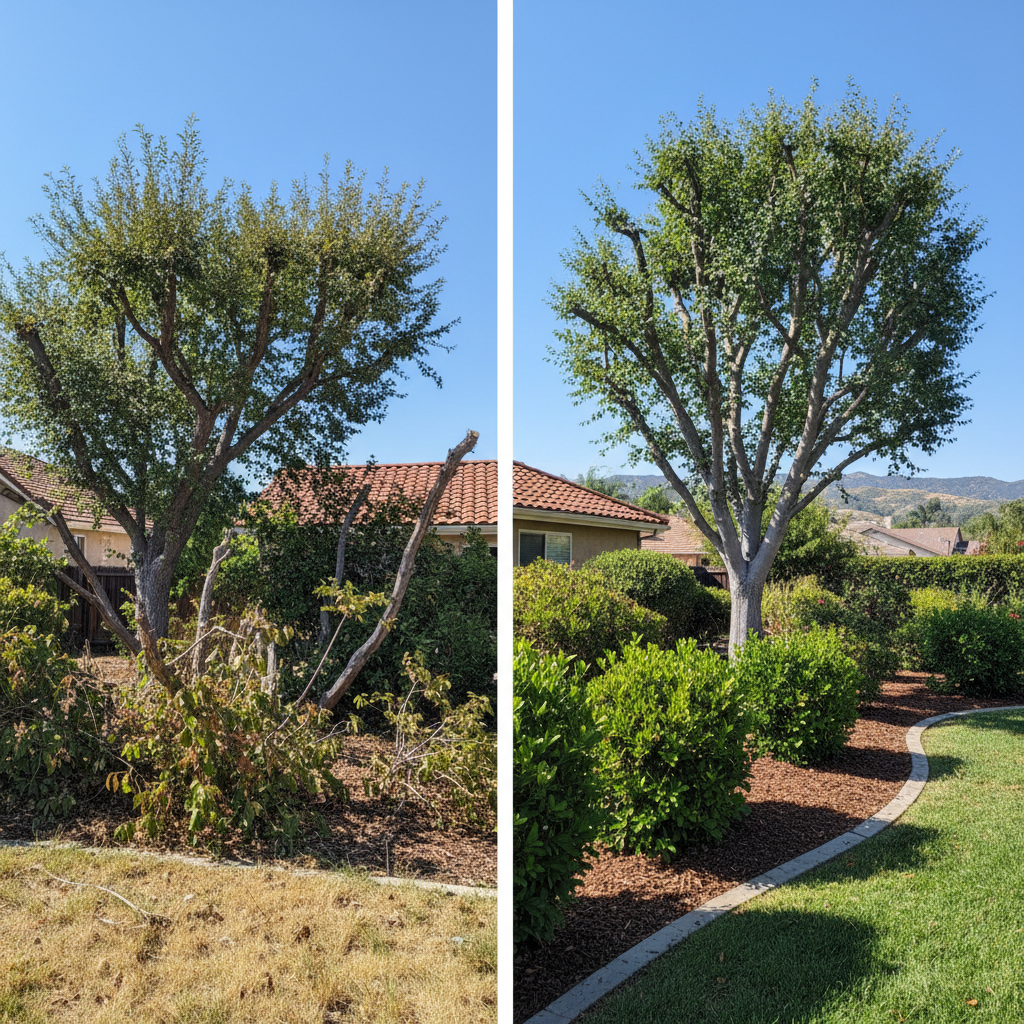
You've got shrubs and bushes around your Irvine home, right? And eventually, they're going to need a trim. But here's the thing: not all trimming is created equal. There are two main ways folks go about it, and knowing the difference can save you a headache, some money, and even your plants in the long run. We're talking about shearing versus selective pruning.
What's Shearing?
Shearing is what most people picture when they think of hedge trimming. It's that quick, uniform haircut where you take a power trimmer – often a gas or electric hedge shearer – and just buzz the outside of the plant. Think of those perfectly squared-off hedges you see in some older, more formal gardens, or maybe around a commercial building. It's fast, it's efficient, and it gives you that immediate, clean, geometric look.
For a lot of homeowners, especially if they're doing it themselves or hiring someone who charges by the hour, shearing seems like the obvious choice. It's cheaper upfront, no doubt about it. A crew can come in, zip around your property, and be done in a fraction of the time it would take for a more detailed job. So, if your main concern is cost and speed, shearing wins the first round.
What's Selective Pruning?
Now, selective pruning is a whole different ballgame. This is where you or your arborist (like us at Midway Tree) go into the plant with hand pruners, loppers, and sometimes even a small saw. The goal isn't just to cut the outside; it's to remove individual branches or stems. You're looking for dead, diseased, or crossing branches, and you're also shaping the plant by cutting back to a main branch or a bud. It's about letting light and air into the plant's interior, encouraging healthy new growth, and maintaining its natural form.
This method takes more time. A lot more time, actually. Because it's so labor-intensive, it's going to cost you more upfront. There's no way around that. But don't let the initial price tag scare you off, because this is where the long-term benefits really kick in.
Cost & Durability: The Real Story
Okay, so shearing is cheaper initially. But here's the catch: because you're only cutting the outer layer, you're encouraging a dense, thick shell of foliage. This means the plant grows back faster, and often, it grows back even thicker. You'll need to shear more frequently – sometimes every 2-3 months here in Irvine with our long growing seasons. That quick, cheap job starts adding up when you're paying for it four or five times a year.
With selective pruning, you're promoting healthier, stronger growth from the inside out. The plant doesn't feel like it's constantly trying to recover from a buzzcut. You'll find that selectively pruned shrubs hold their shape longer, and you might only need to prune them once or twice a year. So, while the individual job costs more, the annual cost often evens out, or even favors selective pruning over time.
Maintenance & Appearance: What Lasts?
When it comes to maintenance, shearing creates a never-ending cycle. That thick outer shell, often called 'witches' brooms' or 'clubbing,' can choke out the interior of the plant. You'll see bare spots inside, and if you ever decide to let it grow out, it looks pretty rough. It also makes the plant more susceptible to pests and diseases because there's no air circulation. Plus, if you're in a neighborhood with clay soil like many parts of Northwood or Woodbridge, plants already have enough challenges without being stressed by improper pruning.
Selective pruning, on the other hand, is about reducing the overall volume of the plant while maintaining its natural beauty. It promotes flowering and fruiting (if applicable), and it keeps the plant healthier. The appearance is more organic, less rigid. It looks like a well-maintained plant, not a green box.
My Recommendation for Irvine Homeowners
Look, I get it. Everyone wants to save a buck. But when it comes to your shrubs and bushes, especially here in Irvine where we have such a long growing season and plants are a big part of your home's curb appeal, I'm going to tell you straight: selective pruning is almost always the better choice.
It's better for the health of your plants, it looks better in the long run, and it often ends up being more cost-effective annually. You're investing in the longevity and beauty of your landscape, not just a quick fix. If you've got a formal hedge that absolutely needs that geometric look, a light shearing might be okay, but even then, I'd recommend mixing in some selective pruning to keep it healthy.
Don't just cut for the sake of cutting. Understand what your plants need. If you're not sure, or if your shrubs are looking a bit tired from years of shearing, give Midway Tree a call. We can help you get them back in shape and on a healthier path.